

Getting started is hard. It takes energy. There are many things you might want to do, or have to do, but in the moment, you would simply rather do something else. The question, then, is how to get started when you don’t feel like it? Is there a secret that productive people know that other people don’t?
I got started thinking about “initiation energy” when I woke up the other day. My husband gave me a Garmin™ watch for my last birthday and now, when I come down in the morning, I check my sleep score. In fact, both of us do. It’s become one of our morning conversations: “What was your score last night?” In addition to my total number, when I synch my phone to my watch, I can check individual statistics on things like stress, restlessness, and REM sleep. This is either amazing or creepy… or maybe a bit of both. One number I can see in a graph format is my heart rate. Here is a snapshot of a recent heart rate chart. Take a look and see if you notice what I noticed.
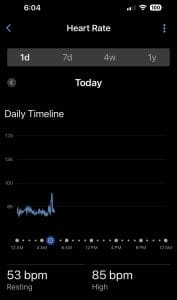
Do you see that sudden spike at about 5:30am? That is when I got up out of bed. I get this same spike every day when I get up. Admittedly, this isn’t the highest my heart rate goes. When I am exercising, it goes much higher. Nevertheless, just getting out of bed causes my heart to beat a lot faster – or work harder – for a little while.
I also noticed, as maybe you did, that once I got up and started my day, my heart rate came back down. It is as if the hard part was just getting up, or getting started, with my day. Isn’t that the way so many tasks are? The hard part is getting started, summoning that extra surge of mental, physical, or emotional energy to get going.
It’s not hard to understand why we put off exerting that energy. A couple of top reasons why we procrastinate include:
- We don’t know exactly how to proceed, so we are uneasy.
- We anticipate that a task will be unpleasant or difficult, so we are resistant.
- We feel overwhelmed by the enormity of the job ahead, so we are intimidated.
- We are tired, sleepy, hungover, distracted, busy, confused, forgetful, etc.
As valid as these reasons are (and they are, no judgment here!), they often do not negate the need for us to take action. We still have to do what needs to be done. But how can we make ourselves start something that we really don’t feel like doing?
Here are a couple of ideas.
Add Urgency

Over the years, I’ve heard many people say that they work best when a deadline is around the corner. This is definitely not the case for me. I get anxious as a deadline nears, and much prefer having time to space out my effort. While some may find that urgency makes them more productive, I suspect that what the urgency actually does is force initiation of effort on whatever task needs to get done. Whether this actually makes a person do their best work is another matter. It’s hard to speculate about whether urgency actually maximizes an individual’s creativity, attention to detail, accuracy, etc. To be honest, I’m doubtful.
For this reason, adding urgency is not my first choice for making yourself initiate effort. Waiting until you are almost out of time may get you started, but it may just mean you are stressed enough to overcome your delaying tactics. If a rabid dog is chasing you, you will probably start running. You may even run fast. But it might not be a pleasant process, and you might find you cannot run fast enough to avoid getting bitten. However, in lieu of other options, I do admit that deadlines can be highly motivating.
On a side note, I will add that some people suggest adding urgency by setting an artificial deadline for themselves. I do like this idea, but it also has drawbacks. If you, yourself, set the deadline, you are pretty aware that it is isn’t real. Hence, you might easily talk yourself out of paying any attention to it.
Break A Project into Pieces
The idea with this one is to break apart a large/scary task into bite-sized tasks. I love this strategy, because it makes the task less intimidating and more approachable. When I work with clients who resist initiating action, I work on identifying one “next step” they are willing to take. The key is that this step is “comfortable” enough that they will follow through. I will always double check, “So, you are totally willing to commit to doing XYZ in the next day?” If the answer is no, we go smaller. The end result might be quite small indeed.
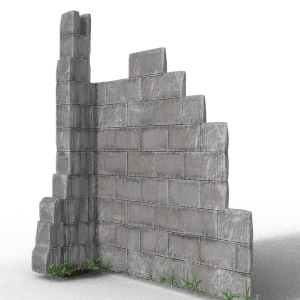
If the “big, scary thing” is to build a wall, this approach focuses on picking up one rock at a time and adding it to the wall. You don’t have to build the whole wall at once. Today you just make yourself add one rock. One rock isn’t so heavy, right? Just add one rock, and then you can be done for the day.
For instance, let’s say you need to replace your furnace. That feels overwhelming. There are lots of choices, all of which represent a significant investment. Furthermore, replacing the furnace will be disruptive. You might feel like you should be considering alternative energy sources, such as moving from oil to natural gas. This process might also lead to complications that impact other aspects of your home, especially if your current system has leaked or is tricky to remove. You might have other house projects that seem more important. You want to go watch your kid’s practice or you need to deal with that work issue. A project like this is easy to put off. Yes, you can “add urgency” by waiting until the furnace finally dies, but then you will still face all the same challenges, only now with the added pressure of having no heat.
Having sufficient time is critical for this strategy to be effective. It makes getting started easier by taking away any need to make a decision or significant progress right now. In the furnace example, you might begin by simply gathering information by doing something like:
- Checking your local Facebook group to ask about furnace replacement.
- Calling the manufacturer of your current furnace to get a replacement estimate.
- Asking a friend or family member what they think the first step should be.
Remember, you don’t need to figure it all out in one day. Each step should be relatively unintimidating. As you gather information, put it together in a matrix (I think every decision is easier when you use a matrix!). Maybe you have replacement options down the left side, and various aspects of choosing that option (price, timing, level of disruption, etc.) along the top.
Set a Timer

This is an oldie, but a goodie. Starting is particularly hard when we feel like doing so will be like stepping into quicksand from which we won’t be able to get out. We fear that once we start, we’ll get sucked in. It will take forever. So rather than begin, we avoid. You might be falling into this mindset if you find yourself saying, “I don’t have a big enough chunk of time to work on this. I’ll get to it when I have more time.” While there may be some aspect of this that is true, it is primarily a stalling tactic. We rarely have a big block of time suddenly appear in our schedule, and when we do, we aren’t likely to jump up and get started on that project we’ve been delaying. If COVID taught us nothing, it was this. If you didn’t get around to whatever it was that you had been waiting to accomplish during COVID, then lack of time probably wasn’t really the issue.
Setting a timer is one way to sort of trick our brains into starting by telling them “We promise, it won’t take all day. Five or ten minutes is all we need to give here. Then, we can be done for the day on this one.”
Our brains have an amazing ability to rally for something we perceive as unpleasant when we know exactly how long we will need to persevere. We know that relief is just around the corner. If you need to work on a task that you really don’t feel like doing, try setting a timer. When the timer goes off, walk away and let yourself be finished. If necessary, keep setting a timer until you get the task done.
A footnote on this one: if you set a timer, but once you get started you “get in the zone” and want to keep going, and if you have the bandwidth in your schedule to do so, by all means keep going. As I said at the beginning of this post, it is often just the getting started that is particularly hard. If you get the ball rolling and feel able to do more, that’s terrific!
Track and Reward

Do you remember the chore chart of your childhood? Maybe you got a star for a task completed, and when you got enough stars, you would get a prize? Many people are incredibly motivated by seeing visual progress. Unfortunately, not all tasks are such that we can actually see our progress, especially in real time. For instance, it takes many days of exercising or healthy eating to finally “see” the results. [I often tell my clients that it takes weeks to lose weight through diet and exercise, but I will help them “lighten up” significantly in three hours… wink, wink!] Additionally, in our digital world, much of our work doesn’t look like much… it just sits on the computer, looking like nothing. It’s not very motivating.
If you are facing a long, multi-stage goal, consider harnessing the idea of track and reward. Many apps have caught onto the power of this idea. I’ve been slowly trying to learn a bit of Spanish with DuoLingo. Each day I complete my little exercise, and when I am finished, it shows me how many days long my streak is. Now that I’m up to more than 500 days, I must tell you that I really do not want to break my streak. It is silly, I know. Missing one day wouldn’t make a difference. But for some reason this streak kind of matters to me: I want to see that number go up! If you are having trouble initiating a task that requires tenacity, such as forming a new habit, try tracking your progress with some sort of visual (e.g., checkmarks on a calendar or a habit tracking app) where you can see your results piling up.
Another way to sweeten the deal is by giving yourself interim rewards for sustained effort. Video games are masters of this concept. Each time you show up and make progress, you unlock some kind of special benefit, such as points or tools. They aren’t tangible, but they are still kind of fun. These little rewards make you feel a sense of accomplishment. To reward yourself, identify something you truly want and/or enjoy but wouldn’t normally allow yourself to indulge in. But don’t overdo it. The key with rewards is to space them far enough apart that they keep you going when you don’t feel like showing up. Your goal is to keep yourself showing up and repeatedly starting again.
Keep The End In Plain Sight
Feelings are very much centered in the “now.” They are strong and present, as real as the objects on our desk or the kids running around the room. In contrast, things we desire in the future tend to feel distant and vague. We may sense that we will feel good when we finish a task or complete a project, but those payoffs are not as tangible as the emotions of the moment.
In order to make ourselves get started, we need to make how we will feel in the future seem more important than how we feel in the present. I often say, what you focus on gets bigger, so do whatever you can to stay focused on the future payoff. For example, you might hang a photo of what you are trying to achieve. Or you can remind yourself (out loud) how great you will feel once you take action on a certain task. You can even talk back to the feelings that are undermining your motivation by saying something like: “Yes, I know I’m tired, but I will be so relaxed and stress-free once I get this done.”
Add Accountability and Resources
In some cases, no matter how hard we try, we cannot make ourselves get started. We cling to the reasons for our procrastination like they are fierce friends. This is a hard situation, because one part of our brain is working against another part. If you feel like you’ve tried to rely on willpower and/or other tricks, but it isn’t working, you probably need to bring in reinforcements. Whereas the “Break a Project into Pieces” approach (see above) has you adding one rock a day, this approach is like bringing in someone else to give you a leg up over the wall.
You can start by asking another person to hold you accountable. I recently heard someone talking about his entry into Alcoholics Anonymous. He began by getting a mentor, and this mentor told the man to call him every single day, which he did. In fact, sometimes he called his mentor five times a day. Asking (or hiring) someone to check in with us about our progress can be a powerful way to make ourselves do what we don’t feel like doing. Why? Because we don’t like letting other people down, and we don’t want to be embarrassed. Pride may go before a fall, but it can also spur us to get things done. Involving someone else encourages us to do what we are capable of but would otherwise avoid doing.
Amusingly, children can be great for this role. Children love to tell adults what to do, largely because they are always being told what to do themselves. If you ask a child to hold you accountable, they will most likely relish this task.
The idea of a body double is another way to take advantage of external accountability. This is another person who sits near you (in person, or even virtually) while you are working on a specific task. The presence of another person, sitting still beside you, helps keep you focused, in your chair, and doing what you need to do. There is no direction or assistance from a body double, simply their presence. We are less likely to get up or get distracted when someone is sitting nearby and, at our request, watching us. College students who prefer to study in the library vs. alone in their room are harnessing the power of a body double, whether they realize it or not. Parents, if your children are having a hard time sitting down and getting started on homework, you can be their body double. Bring a stack of “desk work” to the table and tell them to bring their work and sit next to you. Then co-work for a period of time.
In some situations, we may need more than accountability, we may need instruction and assistance. We should never feel bad about asking for help. Reaching out for help is a sign of intelligence. Nobody knows everything, and everyone struggles with something. If you have a task or project that you simply have no idea how to begin, the first step is to reach out to someone who does. Depending on the specifics, this may be someone who provides coaching throughout the project, or perhaps someone who shares insight on how to begin, after which you feel equipped to complete the task independently.
* * *
Tom Petty and the Heartbreakers may have sung “The waiting is the hardest part,” but I think that getting started is often the hardest part. The good news is you don’t have to feel ready to begin. Tell those feelings to take a backseat and make the choice to get started.
How do you get started when you don’t feel like it?


I’ve noticed a shift as I get older. When I was a university student, I would start working on assignments weeks before the due date, plunking away until they were done. Some other students would do it all in the last week or so and even request an extension sometimes. Lately, I’ve discovered that the pressure of a looming deadline really does motivate me to buckle down and work on things that may not excite me.
I’d be interested to know if others have had similar experiences.
So interesting to see a shift in your productivity pattern. I will also be interested to see what everyone says!
Great article! I agree, getting started is often the hardest part. You have a lot of great tips in here. I find the best way for me is if I’m not feeling a sense of urgency I need to carve out a space on my calendar to do just the task.
Getting a task onto my calendar is very motivating to me. I want to cross that off, and once it is “in the book,” I’m much more likely to do it.
When I find it hard to start a project, starting with the smallest task helps me. Sometimes it’s just all the things that need to happen and when is confusing to me. We are renovating a bathroom in our home and just this weekend my husband and I are discussing all that still needs completion. We were having a hard time “getting it done”. Writing everything down in a timeline helped me see the bigger picture. Even though my husband is doing most of the work, I know when I can jump in to help (by cleaning up the dust, etc.). I like checking things off a list too!
Good luck with the bathroom renovation. That is definitely a complex project!!
Great post, Seana! It’s interesting that you are bringing this topic up today, my hubby and I discussed something similar on our walk. For me, the more significant tasks must be broken down into smaller steps, and then I will start them right away and continue through the process of getting things done.
For him, the smaller tasks rarely get done because the more substantial projects are more important. So, what do I do? I remind him of critical small tasks.
I find that repairing or doing small tasks can save us time and money in the long run.
My husband is (slowly) warming to the idea of repairing as well. It definitely saves you money, particularly because some of our things were better made than the replacements we could purchase!
The connection you described between your sleep/heart rate monitor and the “initiation energy” concept is brilliant. I haven’t heard it described that way before, and I love it! Did you come up with that term?
It DOES take energy to start, and that’s often where the challenges begin. As you described, it takes extra energy to begin. As your chart showed, a spike in resources is needed to get going. But what I see happening for my clients and sometimes myself is that needed energy is instead spent on ‘thinking’ or ruminating about the project or task.
What needs to happen next or first? How will I carve out the time to do this? Looped thoughts persist about possible obstacles. We psyche ourselves out before we even start. And we drain our energy and resources, making it more challenging to get going.
You shared excellent suggestions for moving forward anyway. For many of my clients, the key ingredient is the accountability piece. Those check-ins, having someone else to brainstorm what’s next, and having regular virtual organizing sessions work. Do obstacles arise? Sure. But we get to discuss those, develop workarounds, and test new options. That’s how progress happens, and it’s so exciting to see.
I’m holding that app visual in my head. I love it, and it says it all!
I guess I’ll take credit for initiation energy…I just assumed it was a familiar term. 🙂
Definitely agree how we can drain our energy with mental spinning. It feels like we are working hard, and it a way, we are. But that hard work is not productive.
Having someone else to hold us accountable, and to help us when we hit one of those obstacles, is so terrific. I remember when I was learning to use a computer. I was newly dating my now-husband, and he knew how to use one. I called him all the time when I hit a glitch, and he would walk me through what to do (or come over and show me). Knowing there was someone to help gave me the courage to try things that I think I would have been fearful of otherwise!
Great material! Initiation energy, or activation energy, is my one stumbling block. I know that I can do anything as long as I start it, but if I can’t envision every step to the end of something, whether it’s putting together a presentation or finding a new doctor with whom I’ll be at ease, I put off that first step.
Even though getting over the hump is an element of how I help my clients, and I have empathy for them, I get so angry at myself when I suffer from the “I don’t wanna” agitation. For me, once I get my butt in the chair or the phone dialed, I’m fine, but getting to that point can be a battle of wills inside myself. Setting the timer and doing a Pomodoro is usually all that it takes, and combined with the accountability of co-working/body doubling, I can get myself past the “ick” and into the zone. And yes, breaking it into pieces — what Ann Lamott in her book Bird by Bird calls “one-inch picture frames” — can really eliminate so much of the stress that keeps us from feeling the activation energy we need.
I tried to find you to friend you on Duolingo, but I couldn’t guess your name. Not breaking the chain helped me stay motivated to learn Italian, and now skipping it would be like skipping breathing. If we’re buddies, I’ll send you high-fives and double-point gifts!
I’m a lot like you in that I have trouble starting when I can’t see how it will all unfold. That bit of anxiety can deter me for sure. I’m a big one for asking for help, though. If someone else has figured it out, that would be my preferred “go to.”
I haven’t gotten social at all on Duolingo. I’ll have to try and find you!
I love the comparison of procrastination and the heart rate monitor for getting out of bed. Getting started taking the first step, knowing what the first is can be big roadblocks . I just finished reading the book Finished by Jon Acuff and he says add fun to the task or project. If it is not fun you will avoid doing it. i think I have always done that. If the task is not fun then I make the reward fun.
Thanks for sharing about adding fun. That is a great tip! I like to think that I add fun when I go work with clients. For myself, turning on music and getting something I like to drink typically adds a bit of “fun!”