
Whether you wear jewelry every day or infrequently, having your jewelry properly organized is important for accessibility, longevity, and security. Here are some beautiful and functional ways to organize your jewelry.
Getting Started
As with any organizing project, the first step is to sort and review what you own. Gather your jewelry on a clear sorting surface and carefully sort it into categories, which might include:
- Bracelets (bangles and chains)
- Necklaces
- Rings
- Earrings
- Anklets
- Watches
- Pins
- Charms
- Studs
- Cufflinks
If your jewelry has become a bit jumbled, this step may take a while. Be sure to have bright lighting, and maybe a safety pin nearby to help you untangle chains.
Now that you can see what you have, take this opportunity to remove anything you no longer want. Perhaps your taste in jewelry has changed, or your body has changed size (e.g., for rings), but whatever the reason, give yourself permission to let go of the pieces you know you will never wear. Take out broken pieces as well.
What to Do with Unwanted Jewelry
People wonder what to do with unwanted jewelry, and I agree that this can be a tricky question. A variety of factors impact a piece of jewelry’s worth, and you don’t want to accidentally discard something valuable.
The first question I consider is the material of the jewelry. Look for markings that help you know if your piece is made of a precious material. For example:
- Is it gold? (10K, 14K, 18K, 24K?)
- Is it sterling silver? (marked with 925, .925, Ster or Sterline?)
- Is it platinum? (marked with PT950 or PLAT?)
Next, look to see if there are any markings that indicate a designer. Some of the names that are well known and often desirable on the resale market are:
- Cartier
- Van Cleef & Arpels
- Tiffany & Co.
- Trifari
- Coro
- Miriam Haskell
- Boucheron
- Bvlgari
- Chanel
- Harry Winston
- Rolex
Having the original box can add value, so take this opportunity to match pieces to boxes if you have them. Original purchase documentation is also helpful.
Aside from the precious pieces, certain costume jewelry can also have value. I once interviewed a representative from MaxSold, a company who runs online auctions where the bidding on lots begins at $1. She said that expert collectors watch these sales looking for a “diamond in the rough,” and that jewelry tends to be a popular seller.
So, third, if you have a piece that you think may have value, consult an expert (like your local auction house) before tossing it into the donate bag.
Also, before you let go, make sure no one else in the family wants these pieces. Jewelry can carry a high sentimental as well as monetary value.
Finally, if you have pieces from a mass merchandiser that you no longer want, I suggest donating them. To ensure that they don’t get comingled or ruined, place each piece in its own plastic bag (the “snack size” zip-top bags work well), and drop them at the charity of your choice.
How to Organize Your Jewelry Collection
Once the decluttering is completed, you are ready to store the jewelry you want to keep.
If you have very high-value pieces, you may choose to store these in a secure location, such as in a safety deposit box at a bank or a locked home safe. Also, if you haven’t already, make sure to insure these pieces. Be aware that this typically requires an appraisal and a rider above and beyond your standard homeowner’s policy.
Sometimes people choose to “hide” their more precious jewelry to minimize the chances of it being found and taken in a home invasion. While I understand this inclination, remember to make sure you don’t hide it so well that you can’t find it.

Now move on to the jewelry you wear on a regular basis. There are many options for how to store jewelry, depending on your space. There are three primary places to store jewelry:
1. Hanging up (e.g., on the wall or back of a door)
2. In containers on the top of furniture
3. Inside drawers
You can work with one type or utilize a combination of the three. To help you figure out how to store your jewelry collection, take a look at some different storage ideas.
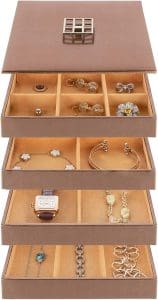
Jewelry Box
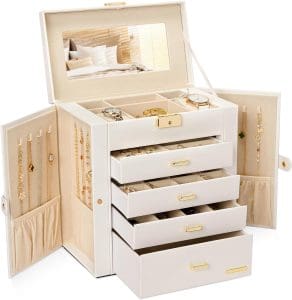
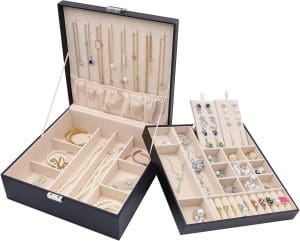
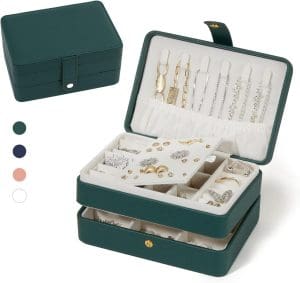
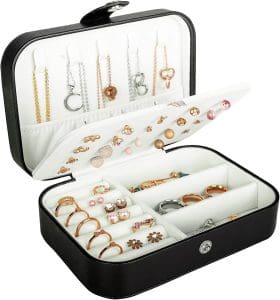
Jewelry boxes are a traditional choice. They come in a variety of shapes and sizes to meet your needs. The best ones have a variety of sub-structures to keep pieces separate and safe.
Racks and Stands
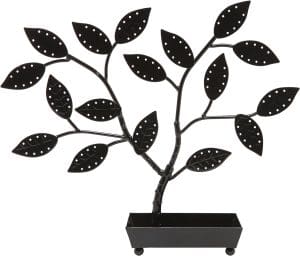
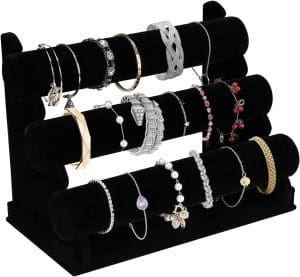
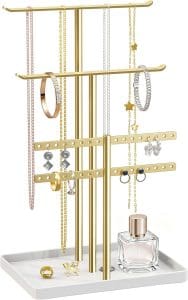
Jewelry can be hung or attached to a rack that sits on a counter. These have a less boxy look and can be quite decorative.
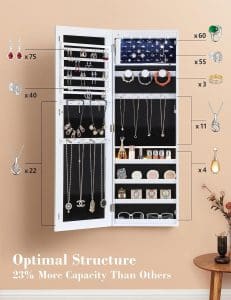
Wall-Mounted Solutions
If you have limited surfaces and/or drawers, you might wish to take advantage of solutions that attach to your wall.
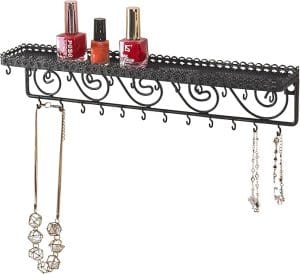
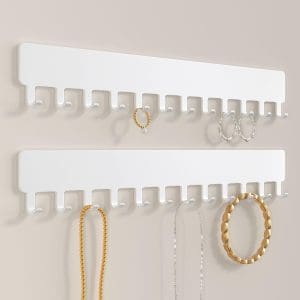
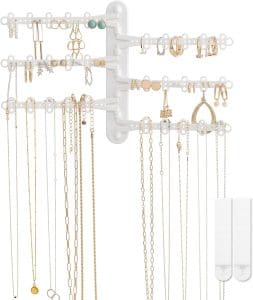
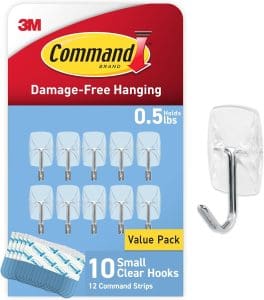
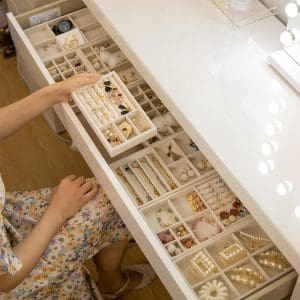
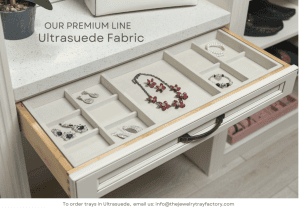
Drawer Inserts
If you have sufficient drawer space, you may want to organize your jewelry using inserts designed for this purpose.
Large Scale Organizers
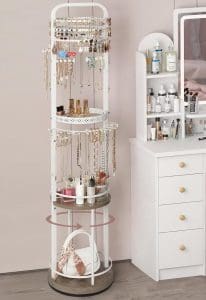
If you have a lot of jewelry, you may want to consider a large piece of “furniture” that is designed to hold jewelry.
DIY Solutions
Organizing jewelry doesn’t have to cost a lot of money. There are a variety of DIY solutions. You can gather any small containers to next into a drawer, like small boxes or ice cube trays. There are also a variety of DIY solutions to hang on your wall. Here are a couple for inspiration.
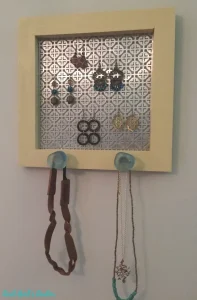
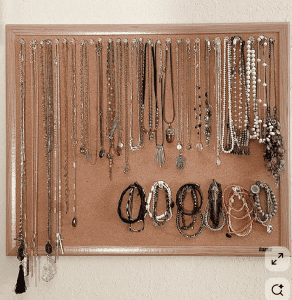
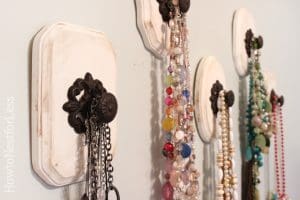
For more ideas, check out my “Precious Stuff” organizing Pinterest Board.
For the Guys
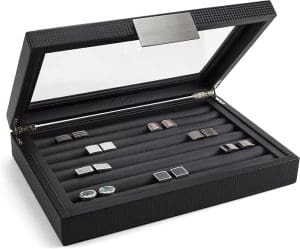
Precious baubles aren’t just for the girls. Men often have things like watches, rings, and cuff links to store. While the approach is the same, there are some containers styled for a more masculine taste.
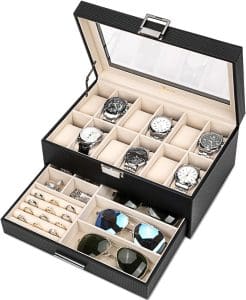
Travel Jewelry Organizer
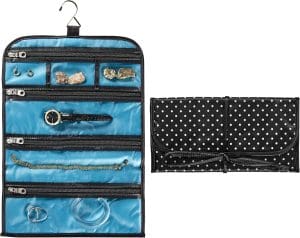
If you tend to travel with your jewelry, it is helpful to have a travel jewelry organizer. You can store this either with your jewelry or in your suitcase. There are a couple main styles.
* * *
Jewelry is meant to be enjoyed. Storage systems that are beautiful and functional make wearing your precious things fun and easy.
How do you store your jewelry?


Jewelry is one of my favorite categories to organize! I divide it the same as you do – frequent access, value, and size. I love that you share all the products that make it easy to wear what you love.
It’s a great project that can really enhance your enjoyment of your most precious pieces!
Your cartoon is fabulous! I love Polly and am so happy to see her back! Your tips for organizing jewelry are really great and I love all your suggestions for keeping it organized. I had locking drawers added to my closet system with flannel inserts to protect the pieces. While I’m sure it wouldn’t take a determined thief long to break the lock, it makes me feel like I’m doing something to deter them.
I love the idea of having a locking option. I know jewelry is small and can easily “go walking.” While it may be easy to break a lock, it is still a deterrent!
I keep my jewelry in a tacky plastic box that was designed to hold craft supplies. I used to have a jewelry box, but I found that hanging necklaces on hooks didn’t keep them from getting tangled. Placing them in a section of the box helps keep them tidy, and I can store matching earrings (if any) in the same box, saving time when I want to wear them.
What a greata solution! Storage never needs to be about fancy. Function, first! Tangling of necklaces is a challenge for sure. I love your approach. Plus, a craft box might not draw a thief’s eye the same as a fancy jewelry box.
I never thought of that aspect, but the box is translucent, so it’s not too hard to see what’s in it. Probably a lot less obvious than a fancy jewelry box on top of the dresser (I keep this in a drawer of my nightstand).
Thank you so much for putting together this very informative piece about jewelry! Diane and I have a client in our clutter support group who has been working on this topic, and I just sent her the link to your blog. I love how you also include less expensive ways of storing what you keep.
Sometimes the DIY solutions work really well, right? I love that organizing is something people can pursue, often without spending any money at all. 🙂
This is a timely post. My jewelry is well organized, but I’m ready to do some culling. There are pieces I no longer wear, and I’m sure it’s time to let them go.
Like most categories, I have my favorites, which I tend to wear frequently. The other pieces are neatly stored, but get little attention these days. A few of the pieces are sentimental. They belonged to my mom or were gifted to me by someone special. While I don’t wear them, I will keep them. But there are other categories of jewelry that I’m not emotionally attached to, I no longer wear, and are candidates for being released.
Thank you for the nudge and the other terrific information you collected.
I went through the process last year and shed a lot of items that I no longer wear. I’m also at the point where I’ve told my husband that I really don’t need any more jewelry. I have enough! What a beautiful feeling to have, about jewelry, or anything, right?
I love this post! I have several on this topic. I am glad you mentioned getting rid of broken pieces. Some years ago, when my mother passed, I found several broken gold pieces and brought them to my local jewelry store. They were able to create a new piece for me at minimal cost, so now, I wear something newly designed with older gold.
Also, be sure to check purse pockets and wallet zipper sections for jewelry. My mom would place the unmatched pieces in these areas.
Good tip about checking pockets. I had a client whose father hid valuable pieces in strange places. We found pearls in a teapot! 🙂
I felt a pang of guilt when I read this. I have some good jewelry containers buy they are over stuffed an not easy to use an I know I have Jewelry I should donate or throw away. Thanks for the nudge.
No guilt, just encouragement to do a little project! It’s a good endeavor for a cold, rainy, or snowy day!
What a great post! I know many people (and have a lot of clients) who have such a huge volume of jewelry, but as the Pareto Principle strikes once again, people actually wear such a small percentage of what they own. 99% of the time I wear one of two necklaces, one of two rings, and one bracelet. But I have so many pins that people gave me over the years, especially when pins/broaches were a bigger thing. Luckily, everything I own and have decided to keep (for now) fits in a jewelry box, and anything I take for travel goes in one velveteen bracelet box, but for those with excess, your tips (especially for valuing “good” pieces and setting broken ones free) are so on-the-nose (on-the-nosering?). Great stuff!
And you rarely use photos in your posts, so I particularly loved this, as I have my pick of photos to share on Pinterest!
Hahahaha on the nosering joke! You have such a great sense of humor, Julie!
I mostly wear my watch and earrings, since those don’t get in my way when I’m working. Fancier stuff is for going out, and most of that I’m not using often my husband and I typically sit on the couch in the evenings. 🙂
I don’t tend to post a lot of photos because I don’t want people to think I am endorsing specific products. However, sometimes it is nice to get a visual for the options that are out there. They definitely do pin better!! (my own attempt at jewelry humor…)