
When I was designing my first bathroom, my contractor nicknamed me “shelving Seana” because I wanted to add shelves everywhere. Shelves, whether in a closet, cabinet, or exposed, can offer the perfect blend of form and function. They also make great use of vertical space. Unfortunately, figuring out how to get the most out of your shelves can feel tricky. Here are some ideas for how to organize things on shelves.
Adjust Shelves to Meet Your Needs
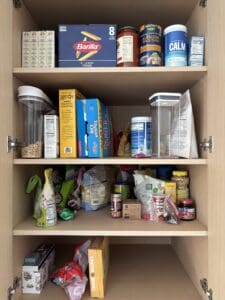
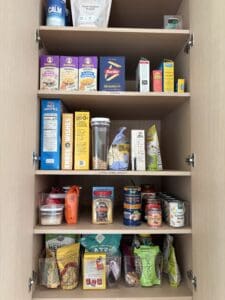
Many shelves are adjustable. When I work with clients, I take a fresh look at where the shelves have been placed. Many times, simply moving the shelves up or down a couple of spaces can truly change the efficiency of the space. For example, in the photos below, you can see in the “before” photo on the left that the largest cereal box (the blue one) was being stored on it’s side because it was too tall for the existing setup. By moving the shelves a bit, we were able to accommodate the tallest containers standing upright. There were plenty of items in this pantry cabinet that were short, so we didn’t sacrifice any capacity by shifting the shelves.
Consider Adding Extra Shelves
Shelves provide instant storage, but in many cases, there aren’t enough of them in a space to make them efficient. The result is that we end up stacking items on top of each other. This makes it hard to access things and also discourages us from putting things away.
There are a couple of ways to add shelves, depending on your particular situation:
- If you have a closet system that was installed by a closet company, they will usually cut and sell you extra shelves. All you need to do is give them the dimensions and tell them the color you need. Make sure to get extra shelf pegs if you need them.
- If you have fixed, wooden shelves, you can either hire a carpenter to add a couple more, or go to a home supply store and ask them to cut birch plywood shelves to your dimensions. These can be installed by adding wooden cleats to support them on the back and sides. If they are behind closed doors, you may not care if the color matches. If you want to try and match it, you can either paint them, stain them, or use veneer tape along the front edge.
- If you want to add shelves to a wall, consider floating shelving. These come in various sizes, colors, and finishes and are fairly straightforward to install. Just remember to anchor into studs and to be aware of any weight limitations.
- Another option is to augment existing shelving by adding glide-out shelving. This can be a DIY project with something like Rev-a-Shelf, or custom carpentry by a company like Shelf Genie.
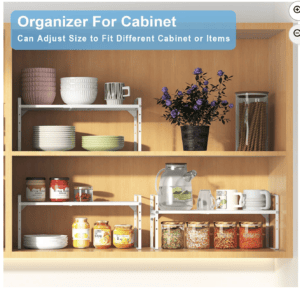
- If you want to add horizontal space for minimal investment, you can add shelf risers or suspended shelves to what you already have. These come in a variety of sizes, materials, and finishes.

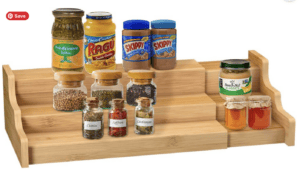
Align the Scale of Items to the Size of the Shelf
One problem I frequently run across is very tiny items sitting loosely on a deep or tall shelf. This is not ideal. Deep, gaping shelves are great for storing very large items (e.g., quilts, pillows, stand mixers, etc.), but not so great for storing tiny things (e.g., bottles of nail polish, medications, hair bands).
Subdivide and Add Structure To Store Small Items
If you need to store small items on large shelves, add structure to contain like items. This can be bins, baskets, jars, or boxes. Clear bins are always nice because you can see what is inside them, but this is largely a matter of personal taste. The options are almost limitless here. Labels are also a good idea.
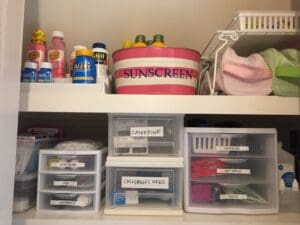

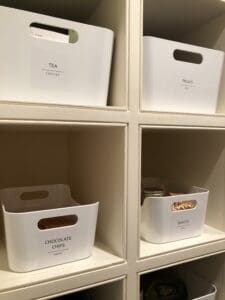
Intentionally Place Items on the Appropriate Height Shelf
Not all shelves are created equal, at least not when it comes to access. A couple rules of thumb to keep in mind:
- Place the things you use most frequently on shelves near eye-level. The less often you use something, the further away from eye-level it can go.
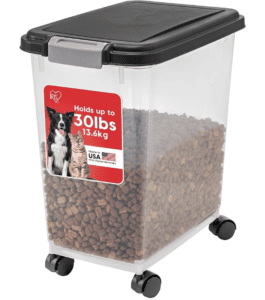
- Put heavy items on lower shelves (e.g., kitchen appliances, large cookware, bags of pet food, etc.). You don’t want to pull something heavy down on your head or knock yourself off balance.
- Use upper shelves for lighter items (e.g., cookie sheets, pillows, hats, sleeping bags, etc.)
Shelves that are out of reach (e.g., over the refrigerator) are good for seasonal items and other things that you don’t need to access very often. For heavy items that you store on the floor, adding a rolling cart or a bin with casters makes access easier.
Containerize Undesirables on Public Shelves
When shelves are out in pubic view, you may wish to add decorative containers to hide the contents. Good candidates for this situation include baskets, leather boxes, and linen boxes. Again, this is a matter of personal taste.

Avoid Overcrowding
Most of us are better at adding items to shelves than we are at removing things. To be attractive, items should be arranged on shelves in a way that is pleasing to the eye. Particularly when I am working on public shelves, I aim to:
- Leave breathing room around pieces.
- Gather similar pieces together in groupings rather than spreading them out across a shelf.
- Avoid stacking items in front of each other.
The goal is to be able to see and retrieve what you want easily, without dislodging nearby items. If you can’t easily get to things on your shelves, it might be time to do a bit of decluttering.
* * *
Shelves are one of my favorite “accessories” because they provide a wonderful space to store and display what matters most. Do you have any tricks for making the most of your shelves?


I really need all the help I can get with shelf organization throughout the home, because this is something I truly am not as good at. So, I thank you for sharing this hear today and am so going to need to take up some of your advice soon now 🙂
If you have any specific questions, feel free to email me a photo:) Love helping my bloggy friends out in return for the smiles they give me online!
I know when we moved into our house 13 years ago I “removed” half a dozen shelves from my kitchen cupboards to make it work for me. However we did the opposite in our closets by adding more with closet organizers.
Ah, such wisdom, Jill. It’s all about making the shelves work for you, right? Sometimes we need more height, and sometimes less:)
Great post. I totally agree. It is OK to add shelving to shelves. It helps you maximize your usable space in your older fixed cabinets and closets. Thanks for reminding us about this important part of organizing.
Thanks for reading, Sabrina! It is amazing how something so simple can almost double your space, right? Or sometimes you need to take a shelf out. It’s all about remembering that shelves are tools with options:)
I’m slowly reorganizing the shelves in my kitchen – thanks for the tips!
Very rewarding place to work, Lana. Sending you lots of positive vibes:)
ha! Shelving Seana! It works. Cassidy is a shelver. He loves to put them in interesting places and put his dorky science fiction toys on each one.
I’ll have to send him this post because he’s no expert and sometimes we just get confused about the space in certain rooms of the house.
Yet another of Cassidy’s strengths:) I love that he displays his toys… collections are for enjoying, not storing away in a box somewhere. Pull them out, stage them, and have fun looking at them. Of course, nice if your spouse also likes the collection!
This is such good advice and really, I need all the help I can get here! I’m always looking for better storage solutions!
I’m amazed at how something so simple as an extra piece of wood can suddenly double storage space. And I get it, Michelle, every inch counts!!
We don’t have lots of shelves at home but that’s really something I’d like to add to our house for enough storage and organization. I’d like to have stylish shelves! 🙂 Great options Seama!
The great thing about a shelf is that it can be super affordable and make all the difference. And if the shelf is on display, you can always get a few attractive bins/baskets to put all the ugly stuff in and still have a very attractive display:) Thanks for the comment, Rea!
I need you to come and organize my drawers. the previous owners put some crazy, deep drawers in that I can do nothing with but throw stuff in – which makes me nutso.
I hear you, Kristen. “Deep” anything can be a real pain… like a black hole. And how often is it the deep drawer that doesn’t open and close well so that you can’t even reach into the back and see what is there?? Maybe try putting smaller boxes or bins inside of them… even shoeboxes work well.
These are all such terrific ideas to stay organized, especially if you tend to collect clutter like I do!!!
Thanks Marcia! I think we all tend to collect clutter, so clearing it out is just a part of life, right?
Ahhh…the lovely shelf. These sound like such great ideas. I would just have to keep in mind with the phase I am with babies and toddlers, I just have to keep things higher than their reach. 🙂
Yes, Brittnei, I say go with the “up high” plan as long as you can:) Eventually, the kids can reach everything!!
I can tell how much you love shelves as a backdrop for organizing spaces. And I’m with you 100%. One issue I’ve experienced for myself and clients is the “too deep” shelf. Those can be challenging because items can get lost in the very back of the shelves.
A few workarounds can help. One is to find individual bins or containers that are almost as deep as the shelves. That way, the bin can ‘contain’ a specific category, which you can easily identify (a label helps). You can also pull the bin out easily, which helps you see the products inside.
The other workaround you mentioned is retrofitting a shelving space with pullout shelves like the ones made by Shelf Genie.
As I read your comment I’m thinking about a recent POINT conversation about finding those extra deep bins. I run across this same issue too. The bins become a drawer of sorts, and are a nice affordable option.
Pull-out drawers are one of those luxuries that dramatically improve your life when installed in heavily used areas. Once you have them, it’s hard to go back!!
I also love shelves. I get frustrated when the shelves aren’t movable and appreciate your suggestions of going to a hardware or home supply shop to have shelves cut for the space. I also like your comment about leaving breathing space on the shelves. It’s hard to find anything in a crowded space!
So many closets lack sufficient shelving. It seems like a big project to get some extra shelves, but it really isn’t. A few wood cleats and plop the shelf on time. If they are behind a door, it doesn’t even matter if they are painted or finished. Just having a shelf can really improve daily living. I love when a small thing makes a big difference!
Shelves are great! My father had a few standalone shelving units he didn’t need any more, and he put them on top of the shelf in my closet, which is quite high and wasted a lot of space. Now I have places to store lots of things! It’s not ideal though – if I’m not careful taking something down, I can bring down the whole unit it’s on. I usually have to use a stepstool so this doesn’t happen.
I have step stools all over my house as I am “vertically challenged” LOL!
You make a good point. If there is a chance of a free-standing shelving system falling down on your head, you may want to attach it to the wall or base of the shelf.
I love that you were able to reuse your father’s shelving units. It just feels great to reuse and repurpose when we can. Plus, many of the older things our parents owned were so well made it is a shame to just trash them!
I’ve just moved to a house with more space and storage than my previous house. I’m in the process of putting things away in the kitchen. This will be very helpful!
How fun! Congratulations on the move. Setting up in a new house can feel so fun, especially when you have more space. 🙂